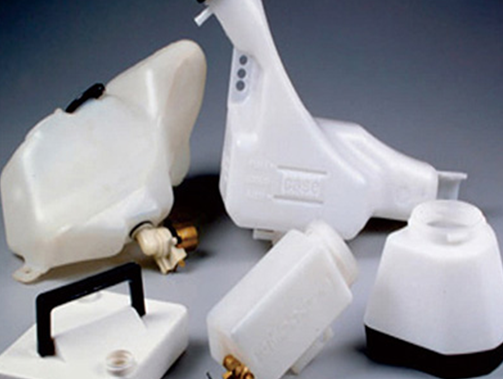
Blow molding, in simple terms, is the process of blowing air into hollow products, also known as hollow forming. Today, Kunshan Juxinchang editor will briefly introduce to you the things related to blow molding processing.
1、 Principles of blow molding processing
Simply put, it is to place the processed raw materials in a split mold, introduce compressed air to make the embryo tightly adhere to the inner wall of the mold, cool it down, and demold it.
2、 Blow molding processing technology method
According to different processes, blow molding can be divided into two methods: extrusion blow molding and injection blow molding.
1). Extrusion blow molding: The resin is softened by an extruder, extruded into a tubular embryo, placed in a blow molding mold, inflated by compressed air, and then cooled to obtain a hollow product that is the same as the mold.
2). Injection blow molding: Using an injection molding machine, the material is injected into the mold to obtain a tubular embryo. After opening the mold, the embryo is placed on the core mold, and the mold is closed while it is hot. Compressed air is then introduced to blow the embryo and obtain a hollow product that is the same as the mold through the inner cavity of the mold.
3、 What products can be produced through blow molding processing?
According to different blow molding processing methods, the products produced by the two will also be different
1). Extrusion blow molding: It has a wide range of applications and can be used to produce large hollow products, such as buckets and water tanks for industrial containers.
2). Injection blow molding: suitable for producing small, large quantities of products, such as mineral water bottles.
The blow molding process can not only produce the above, but also products such as pallets, roadblocks, double ring buckets, kayaks, etc.
4、 Selection of raw materials for blow molding processing
1). HDPE: High density polyethylene, which is one of the commonly used materials in blow molded products. This type of plastic is suitable for producing various products such as heavy metals, glass, packaging paper, coolers, fuel tanks, industrial drums, etc. It has a wide range of uses. Its material is semi transparent, with good stretchability, strong plasticity, non-toxic, and is also a relatively reliable material.
2). PP: Polypropylene is also a commonly used resin, suitable for high temperatures. Its texture is semi transparent like HDPE, with high hardness and low density. It also has certain advantages and is commonly used in medical devices, chemical containers, pharmaceuticals, etc.
3). PET: Polyethylene terephthalate, a commonly used resin in daily life, has good physical and mechanical properties and is suitable for various bottles, such as cola bottles, and can also be used as electrical components. Its color is mostly milky white or light yellow, with a smooth and glossy surface.
4). LDPE: High pressure low-density polyethylene, which is a lighter variety of polyethylene resin. Has good transparency and flexibility. Commonly used in clothing, food seasonings, and blown plastic bag films.
If you want to know more about blow molding processing, you can consult with Kunshan Juxinchang editor!
1. Emphasize integrity (honesty and trustworthiness), without integrity, we cannot trust each other
2. Seek truth from facts and have a perfunctory attitude towards work without any major differences
3. Teamwork, unity is strength, mutual assistance and support
4. Efficient execution (sense of responsibility): Proactive and proactive, without any excuses
5. Mutual tolerance and respect
Honor, shame, and ambition
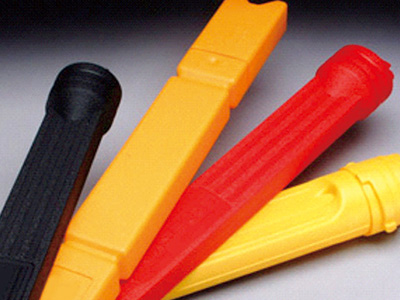
Juxinchang believes that the development and application of plastic blow molding technology are complementary to the development of blow molding materials. Blow molding materials have gradually evolved from LDPE, PET, PP, and PVC products to blow molding engineering plastics, rubber, and some composite materials.
1) Special requirements for rubber materials in various plastic blow molding processing materials
A. Extrusion blow molding
Extrusion blow molding is carried out in a viscous flow state, so in order to reduce billet sagging and optimize wall thickness distribution, plastics with higher molecular weight are usually used.
B. Injection blow molding
Injection blow molding is carried out in a high elastic state, and in order to reduce the energy consumption of injection molded blanks, some easily flowable plastics (plastics with smaller molecular weights) are used.
C. Injection stretch blow molding
Non crystalline plastics are generally used because they have lower intermolecular entanglement forces and are easier to stretch. Although PET also crystallizes, it is still the main stretch blow molding material, and its crystallization rate is quite slow. In short, the vast majority of blow molded plastics have a medium to high molecular weight distribution.
2) Types of materials for plastic blow molding processing
A. Polyolefins
HDPE, LLDPE, LDPE, PP, EVA are generally used for blow molding industrial products, containers and toy accessories, storage containers for chemical drugs, etc.
B. Thermoplastic polyester
PETG and PETP are mainly used for blowing carbonated beverage packaging bottles, wine bottles, etc. They have gradually replaced PVC and are widely used. The disadvantage is that their cost is relatively high, mainly used for injection pull blow molding.
C. Engineering plastics (alloys)
ABS, SAN, PS, PA, POM, PMMA, PPO, etc. have gradually been applied in industries such as automotive, pharmaceutical, home appliances, and chemical, especially PC and its blended plastics, which can blow produce high-quality containers and automotive products (PC/ABS, etc.).
D. Thermoplastic elastomer
Usually, SBS, SEBS, TPU, TPE and other blow molded materials are used as rubber materials, while thermosetting plastics, vulcanized rubber and cross-linked PE cannot be blow molded.
In the plastic industry, many companies consider using blow molding technology to produce hollow products in order to save costs. Compared to injection molding, this greatly reduces costs. Therefore, the method of plastic blow molding has also developed rapidly. Blow molded products are also widely applicable, such as in the toy industry, packaging industry, electrical industry, and other industries.
The position of the mold separation (closing line), product slope, product layout, inflation ratio, rounded corners, and appearance modification involved in the plastic blow molding process are factors that mold engineers and blow molding engineers need to consider. The specific analysis of Juxinchang is as follows:
1. Position of the mold line. Before opening the mold, the mold engineer needs to carefully consider how to divide the mold, which will affect the subsequent production of the product and the appearance of the product;
2. Product slope. All surfaces parallel to the direction of mold movement should have a certain slope, and the slope should be such that the mold can be easily opened for easy removal of the product;
3. Check all usage functions. When used as a product, it is better to have fewer components and assembly work, as it can reduce the cost of the product;
4. Inflation ratio. During inflation, pay attention to areas with extremely thin geometric shapes, which may be protruding or recessed. When the width to depth ratio is too large, vacuum forming can be used as an auxiliary method;
5. Principle of radius. Avoid sharp edges, corners, sudden changes in surface, sudden changes in product diameter or wall thickness;
6. The positions of inserts, exhaust slots, intake needles, top pin holes, engraving, and labels need to be carefully considered.
In summary, whether it is a small blow molded product or a large blow molded product, the energy and time required before development cannot be reduced. It is necessary to carefully consider the factors that may affect the plastic blow molding processing effect in order to match the appearance and function of each blow molded product well.

手机

留言

抖音




 语言选择
语言选择 
 189-1326-9266